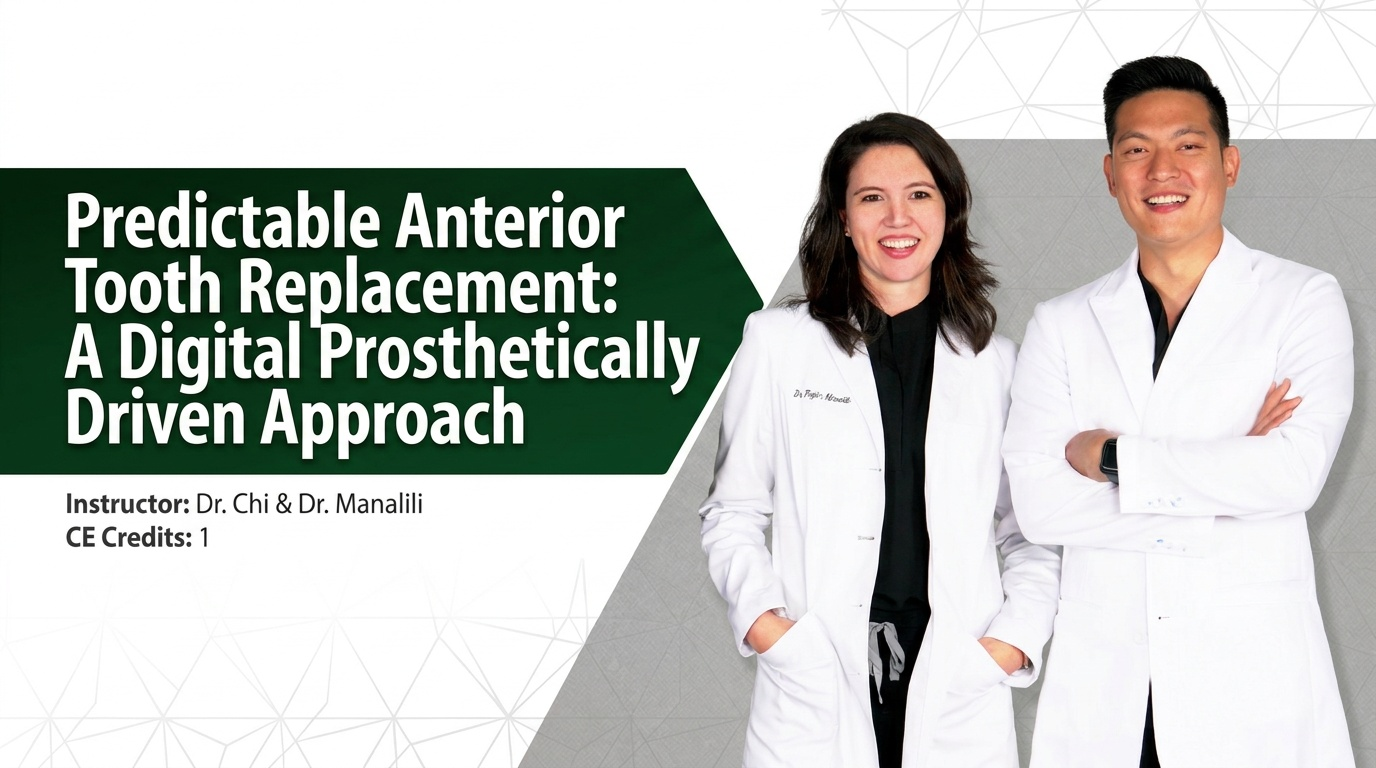
This program will explore predictable solutions for single-tooth replacement in the anterior zone—one of the most aesthetic and technique-sensitive challenges in restorative dentistry.
Using a top-down, prosthetically driven approach, the presentation will highlight how digital workflows—including intraoral scanning, CBCT, and diagnostic wax-ups—improve treatment planning and clinical outcomes.
Through real-world cases, attendees will compare three common treatment options: a Maryland bridge, a 3-unit fixed bridge, and implant-retained restorations.
Special emphasis will be placed on implant planning and the decision-making process between screw-retained and cement-retained restorations.
Attendees will gain practical insights to enhance case selection, improve laboratory communication, and achieve predictable aesthetic results.
Learning Objectives
Participants will learn how to:
- Explain top-down, prosthetically driven treatment planning
- Compare Maryland bridges, fixed bridges, and implant-retained solutions
- Apply digital workflows to improve planning and outcomes
- Differentiate between screw-retained and cement-retained restorations
- Understand how implant positioning impacts aesthetics and soft tissue
- Improve communication with the dental laboratory for predictable results